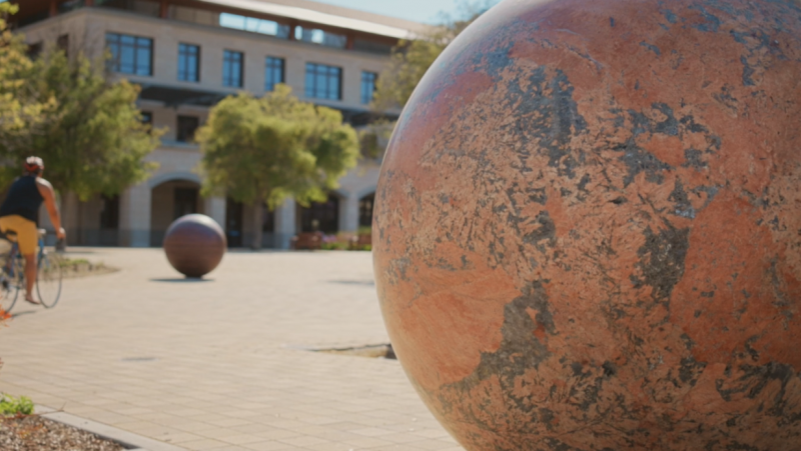
This residency is hosted by the Department of Bioengineering with support from the Doerr School of Sustainability's Visiting Artist Program and the Office of the Vice President for the Arts.
Fermentation Festival
Friday, April 17, 4:00–6:00 PM
O’Donohue Family Stanford Educational Farm
555 Fremont Road, Stanford
Parking located at the Searsville Lot
Join us for a lively celebration of fermentation, art–science collaboration, and Stanford’s first Chef in Residence, Ramón Perisé of two-Michelin starred Mugaritz.
Enjoy small bites, music, and educational giveaways while discovering the magic of microbes and mycelium—and the groundbreaking work happening at Stanford around food, sustainability, and the future of how we eat.
RSVP
Open to the Stanford Community
This program is sponsored by the Office of the Vice President for the Arts and the Doerr School of Sustainability Visiting Artist Program in collaboration with the Department of Bioengineering, the Hill-Maini Lab, and the O’Donohue Family Stanford Educational Farm. Special thanks to Vera Prokopieva (Farm Cookbook), Chef Andrew Mayne (R&DE), and the Community Print Shop team at the d.school.
_____
Past Events
_____
FALL
Bio-X Food@Stanford Seminar
FERMENT(N)ATION: From Microbes to Campus Communities with Mugaritz
The Bio-X Food@Stanford Seminars highlight innovative food-related research seeking to create nutritious, health-promoting, and sustainable food futures.
Thursday, October 30, 2025
4pm to 5pm
Clark Center, Clark Center Auditorium
Speakers
Ramón Perisé and Jordi Bross
From Mugaritz's approach, fermentation is not only a biological matter: it is a metaphor for transforming ingredients, ideas, and relationships, as well as a creative language for designing experiences with shared meaning. We will explore the essence of fermentation, how microbes inspire models of cooperation, and how those principles translate into bio-art-culinary scenarios (though workshops, installations, dinners, and other). We will integrate an aesthetics of sustainability, understood as a sensory and narrative choreography that, by staging tensions—local/foreign and clear/enigmatic—turns eaters into co-creators and therefore transforms the act of eating into a source of knowledge and culture. We’ll close with a practical framework to co-ferment projects from interdisciplinary approaches, going from the lab to the table—and viceversa.
Recorded Lecture
_____
SPRING
Doerr School of Sustainability Dean's Lecture
The Aesthetics of Sustainability: From Lab to Table and Back
A conversation with Ramón Perisé, R&D Chef at Mugaritz and Vayu Hill-Maini, Assistant Professor of Bioengineering
Monday, April 6, 2026
5-6pm, Reception to follow
Mackenzie Room, Jen-Hsun Huang Engineering Center Room 300
475 Via Ortega 3rd Floor
Join Doerr Visiting Artist, Chef Ramón Perisé of two Michelin starred restaurant Mugaritz, and Stanford bioengineer Vayu Hill-Maini for a lively conversation about how artists and scientists are reimagining sustainable food systems. Exploring fungi, fermentation, ancient tradition, and future food innovations, they will discuss how creativity drives discovery-and why meaningful change requires not just new ideas, but new ways of thinking, feeling, and shaping a
sustainable future.
_____
About the Artist
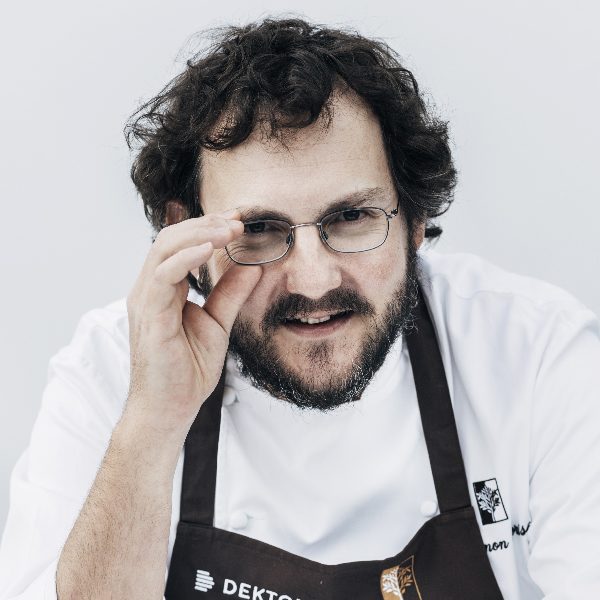
Ramón Perisé is a culinary researcher, artist, and thinker whose work blends science, sensation, and storytelling across disciplines. He is head of Innovation and Development at Mugaritz, a two-Michelin-starred restaurant located in the Basque Country of Spain. Mugaritz is distinguished for its innovative approach to culinary art, combining creative gastronomic philosophy that blends cutting-edge culinary techniques with a deep respect for local ingredients and traditions.
Doerr Visiting Artist
Ramón Perisé will propose looking at fermentation as a living narrative that connects entire ecosystems in different scales—from the microbiome to campus communities—to learn what’s behind inherent processes like symbiosis, but also from values like collaboration, uncertainty, and time. Perisé’s activities will provide hands-on opportunities to engage with fermentation at a sensory, emotional level to push the status quo and spark meaningful conversations around food.
Articles about the residency:
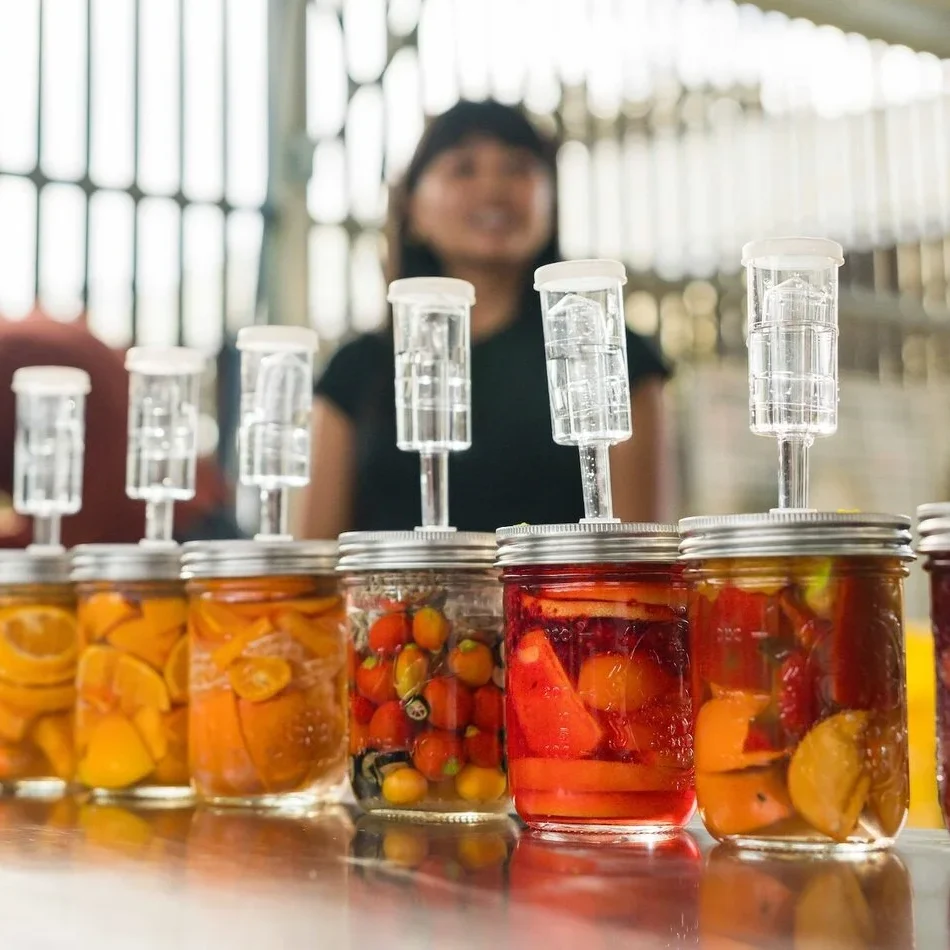
Food, Agriculture, Fisheries & aquaculture: Feeding families in a warming world
Stanford researchers are studying how changing weather patterns, rising temperatures, and ecological shifts affect the global food system, while developing ways to improve food security for all.
Interested in learning more?
Vayu Hill-Maini
Hill-Mainu Lab
Assistant Professor of Bioengineering
Department of Bioengineering, Schools of Engineering and Medicine
vauhm@stanford.edu
Ellen Oh
Director of Interdisciplinary Arts Programs
Office of the Vice President for the Arts
ellenoh@stanford.edu
Emily Polk
Advanced Lecturer
Earth Systems Program, and Arts and Sustainability
Doerr School of Sustainability
empolk@stanford.edu