Student photo exhibition showcases art’s role in culture and community
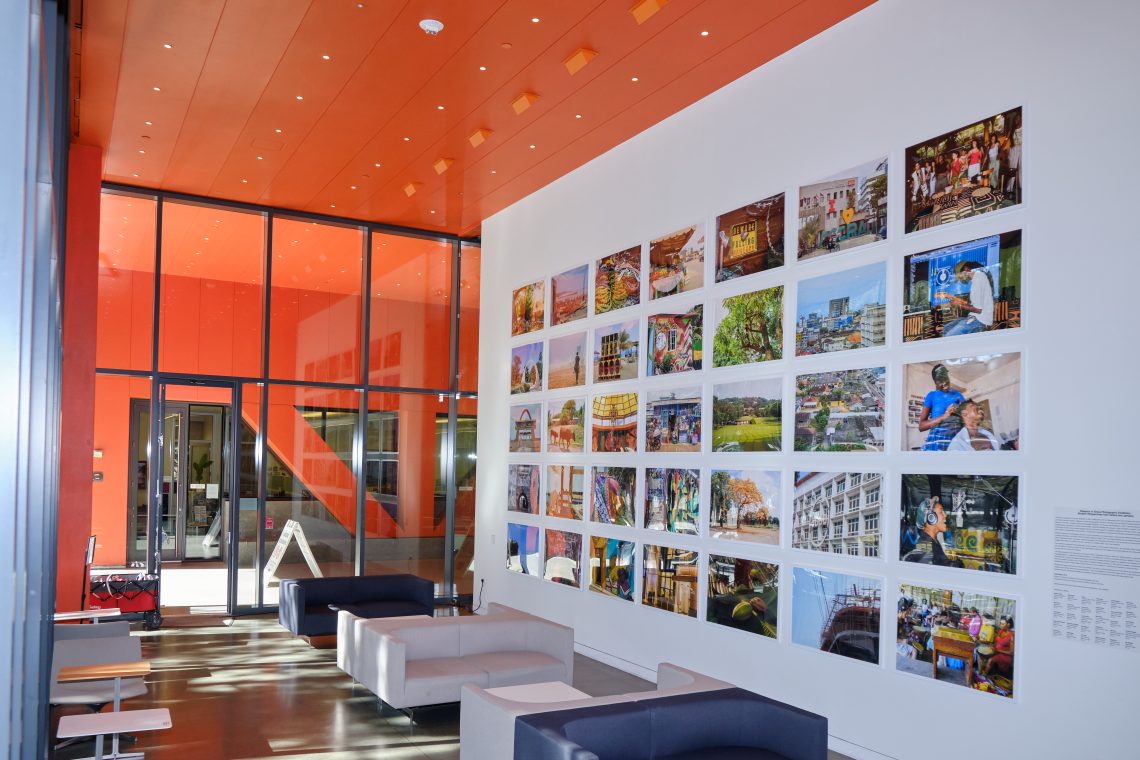
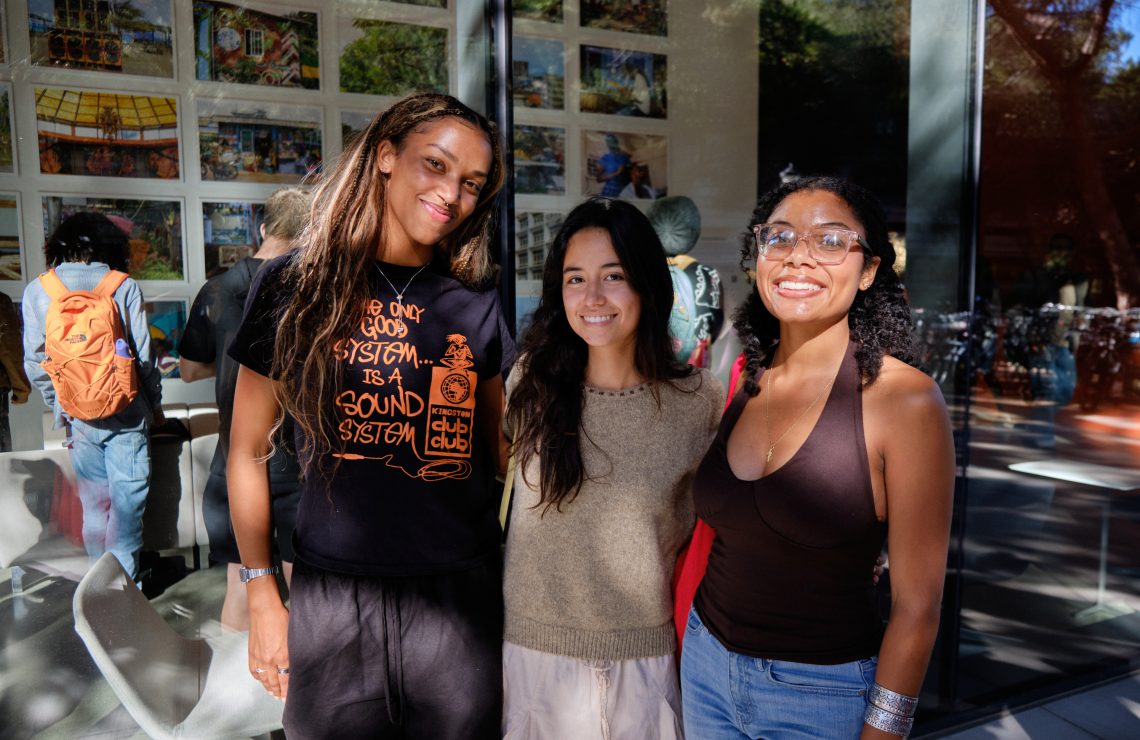
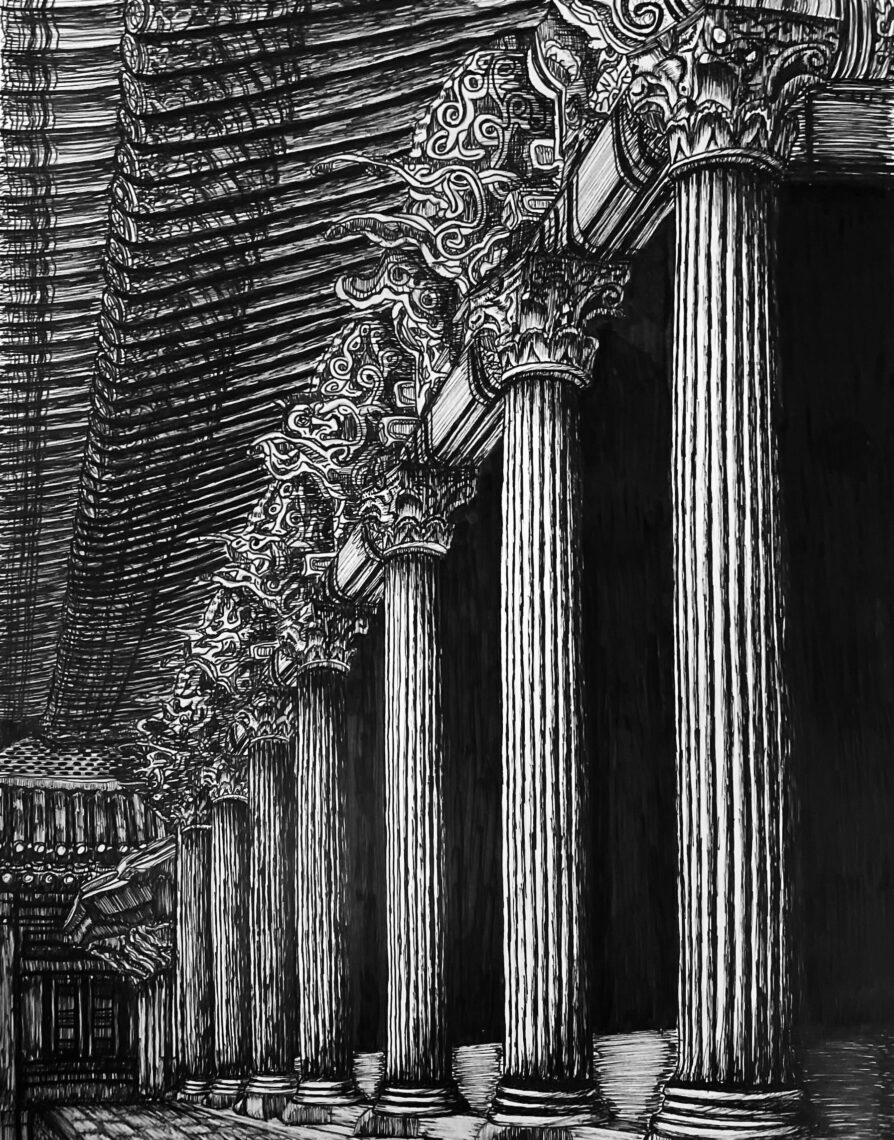
A colorful wall mural lauding literature’s link to possibility, a reggae artist playing guitar in a recording studio, and a 7-foot statue of a man looking up toward the heavens — these are just some of the images featured in “Diaspora in Focus Photography Exhibition: Student perspectives from Ghana and Jamaica,” the culmination of student work from two Bing Overseas Studies Program (BOSP) global seminars this year.
On display at the Gunn Foyer Gallery of the McMurtry Building from Oct. 14 to Dec. 5, the Jamaica half of the gallery’s photos come from students who took “The Arts in Jamaica: Exploring Knowledge Production, Community and Resistance,” taught by Katie Dieter, director of Advanced Studies and Community Engaged Learning, and African and African American Studies.
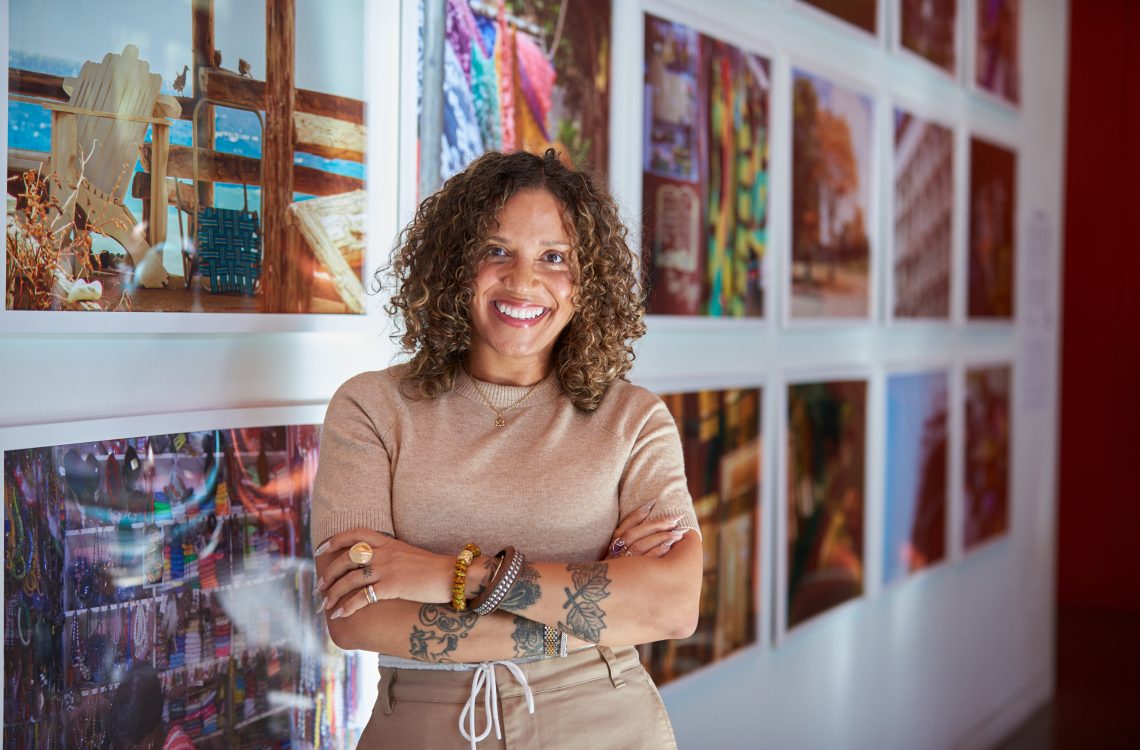
“Because my background is in the arts and Black studies, I’m always looking at things in those lenses, so it was an obvious trajectory for me to take students back to Jamaica at some point,” said Dieter, who spent four years as a senior lecturer at Edna Manley College of the Visual and Performing Arts in Kingston, Jamaica, before coming to Stanford.
“I really wanted students to be immersed in Kingston’s art scene and work directly with artists to co-create and learn from them.”
The course, which took place over 25 days in summer 2025 and was the first BOSP seminar in the Caribbean, explored art in all its forms including drum workshops, music recording sessions, art gallery visits and photography lessons, among other activities.
The course’s cohort consisted of 15 Stanford students studying a range of majors from English and engineering, to history and comparative studies in race and ethnicity, along with two photography students from Edna Manley College of the Visual and Performing Arts.
“I signed up for the seminar because I was excited by the opportunity to connect my interests in history, music and the diasporic roots of jazz,” said Penelope Keep, a sophomore studying history. “I learned some really important lessons from the artists we interacted with there. Their emphasis on authenticity and unwavering belief in the art making process was a message that stuck with me.”
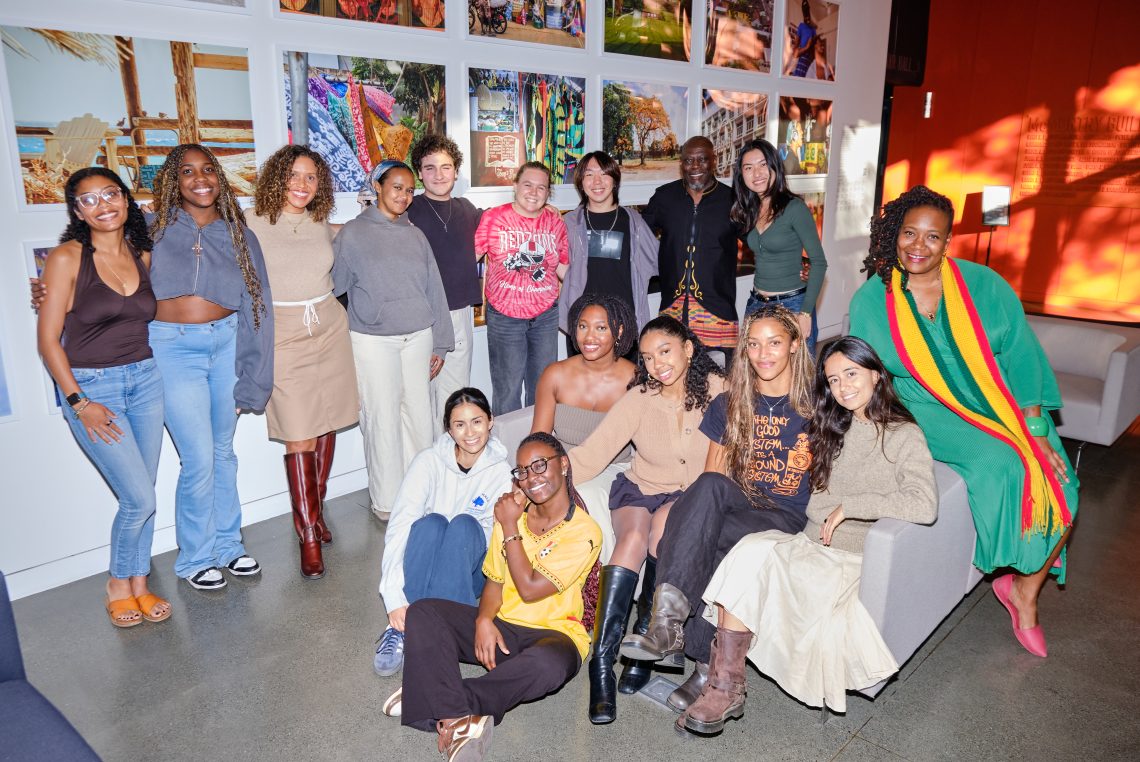
Each student submitted photos for the exhibition, in addition to a creative final project that reflected what they learned and experienced while in Jamaica. Keep, who plays jazz piano and saxophone, centered her final project on the history of the songs she played with musicians while in Kingston, and contributed an image of reggae artist Runkus in the recording studio during a moment of musical collaboration.
“I wanted the class to be something where we’re not just talking and learning about these artistic concepts, but putting them into practice,” said Dieter, who curated the exhibition. “The way that [students] embraced that was really special and transformed them and myself in terms of thinking of the potential of building community in a classroom.”
Jayne Abraham, a senior studying comparative studies in race and ethnicity, and English, says she left the experience feeling inspired from being around successful creative people who are passionate about their craft.
“I think being in an environment where creativity is valued, and where you’re among people who also see you as a creative person is an exchange that you can’t really get in the same way you would in a traditional classroom setting,” Abraham said. “It was also really interesting to be among a population of people who are so aware of their history and culture and so connected to it,” she said. “Jamaica is a diverse place and I found that everyone had a really intimate knowledge of Jamaican history and culture that they could speak to.”
The seminar was co-sponsored as a Global Arts Immersion, an initiative of the Stanford Arts Institute (SAI) made possible by The Yuk Family Fund for Global Arts Experiences, which supports enhancing Stanford student opportunities in arts on an international stage.
“Stanford Arts Institute’s mission is to support interdisciplinary creative research on campus in all sorts of ways,” said Jessi Pipert, associate director of SAI. “Part of that is doing various arts immersion programs both domestically and abroad.
“Looking at the photo exhibition that students put together, you can tell that this was art making in deep connection with really important, broad social themes and questions that all these students are interested in,” Pipert said. “I think that there’s something really spectacular that happens when students get these experiential art encounters, that makes it different than learning about art in the classroom.”