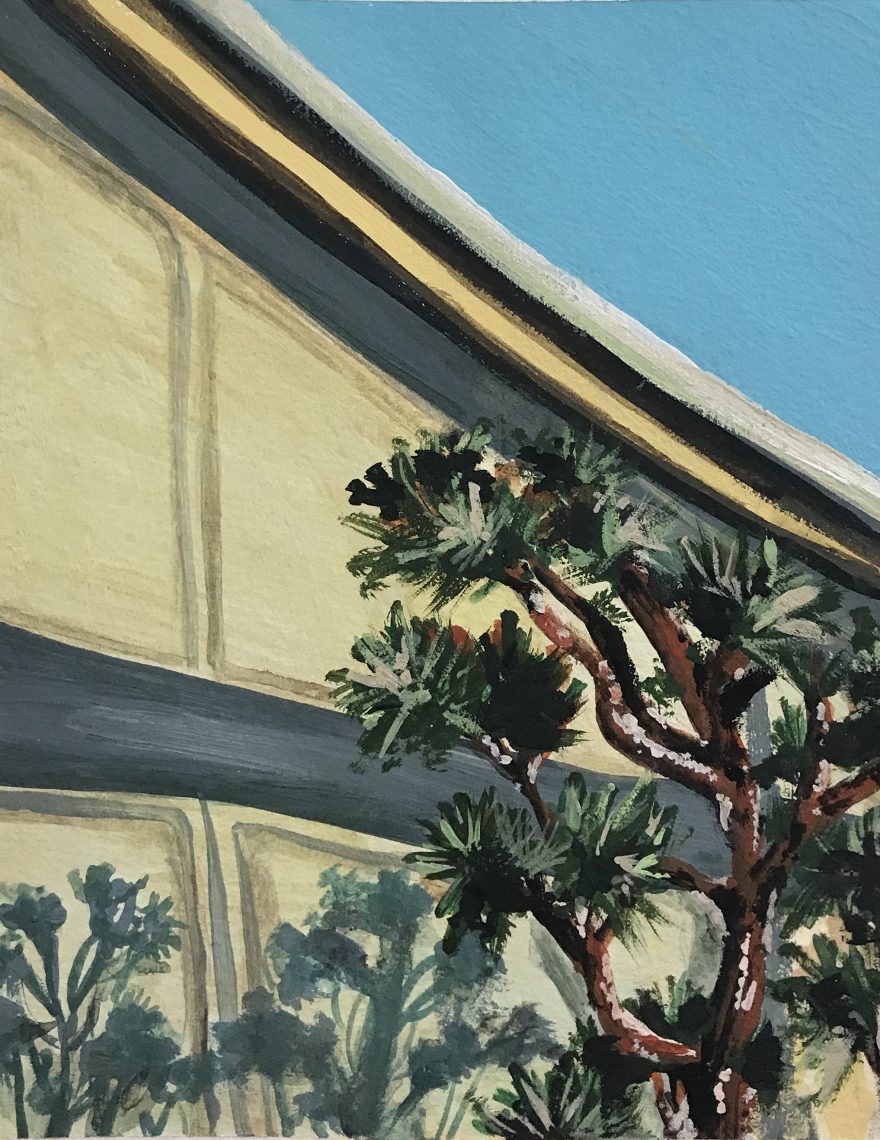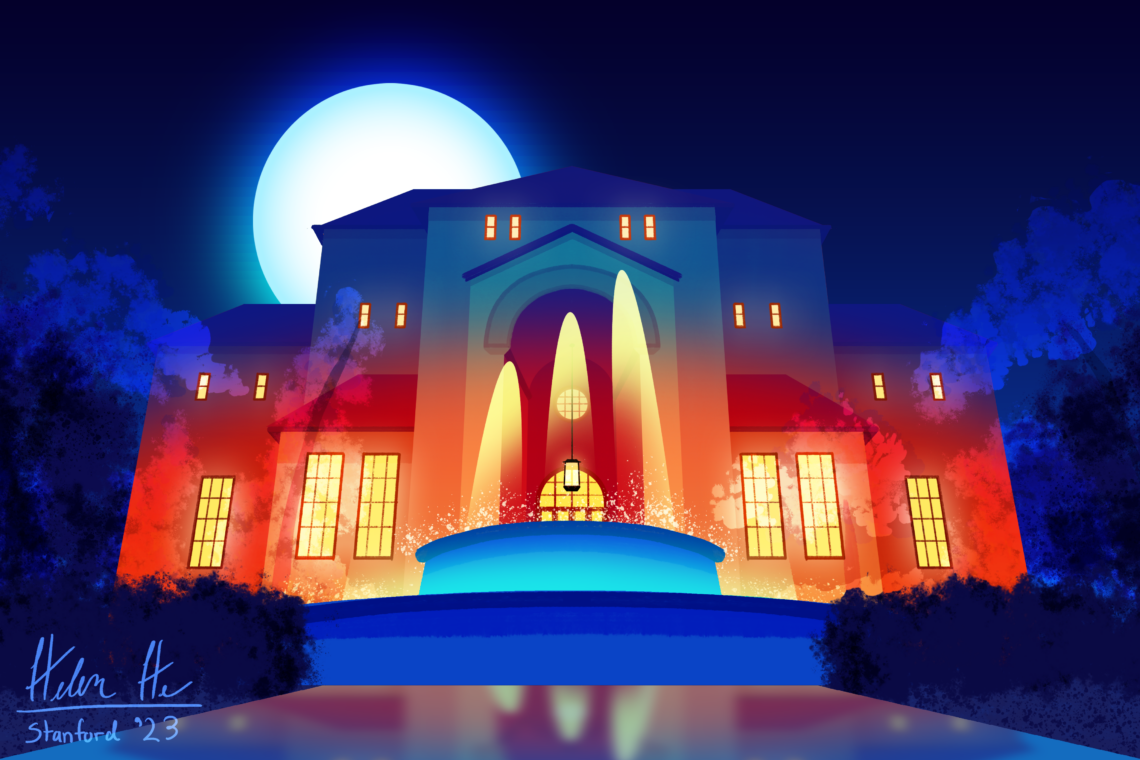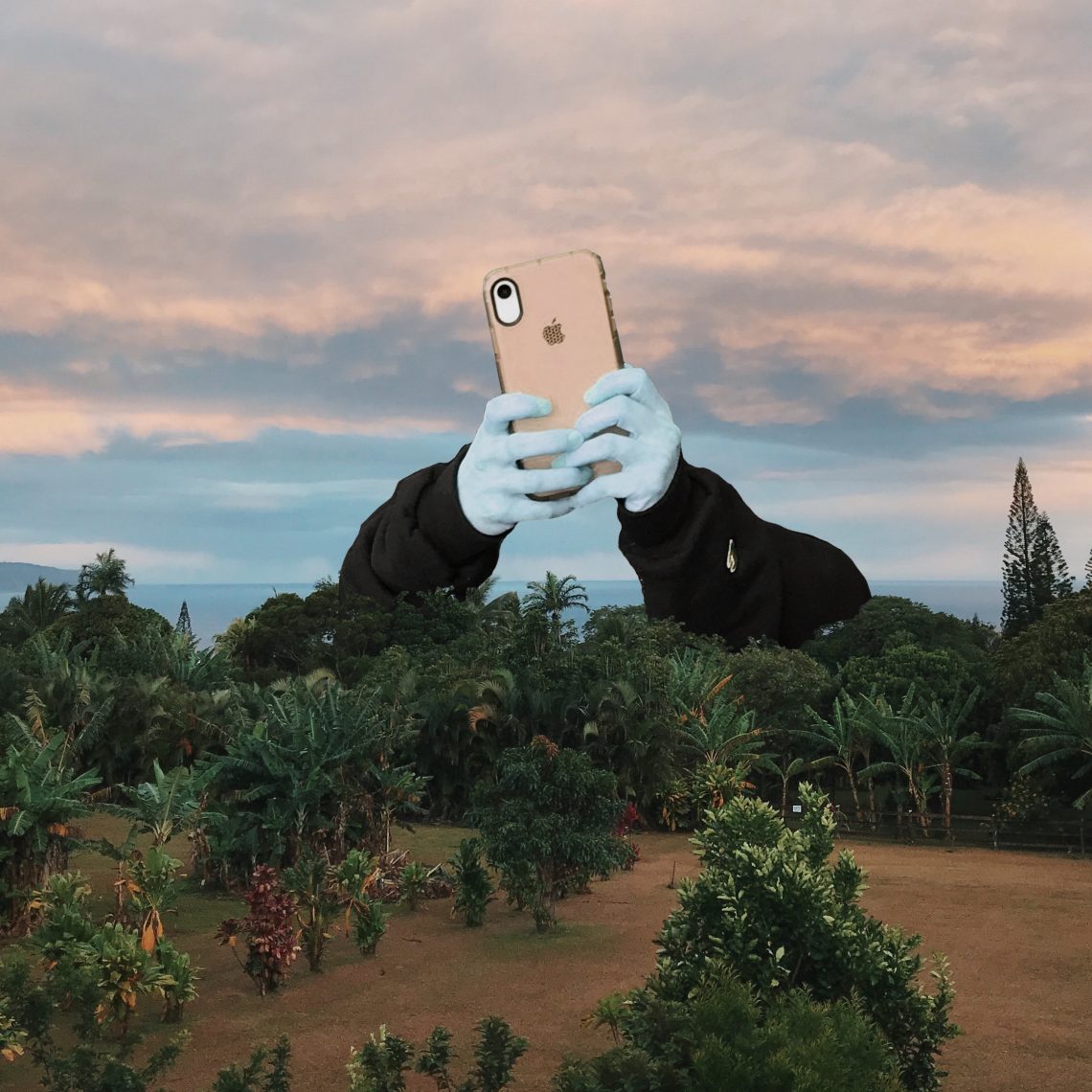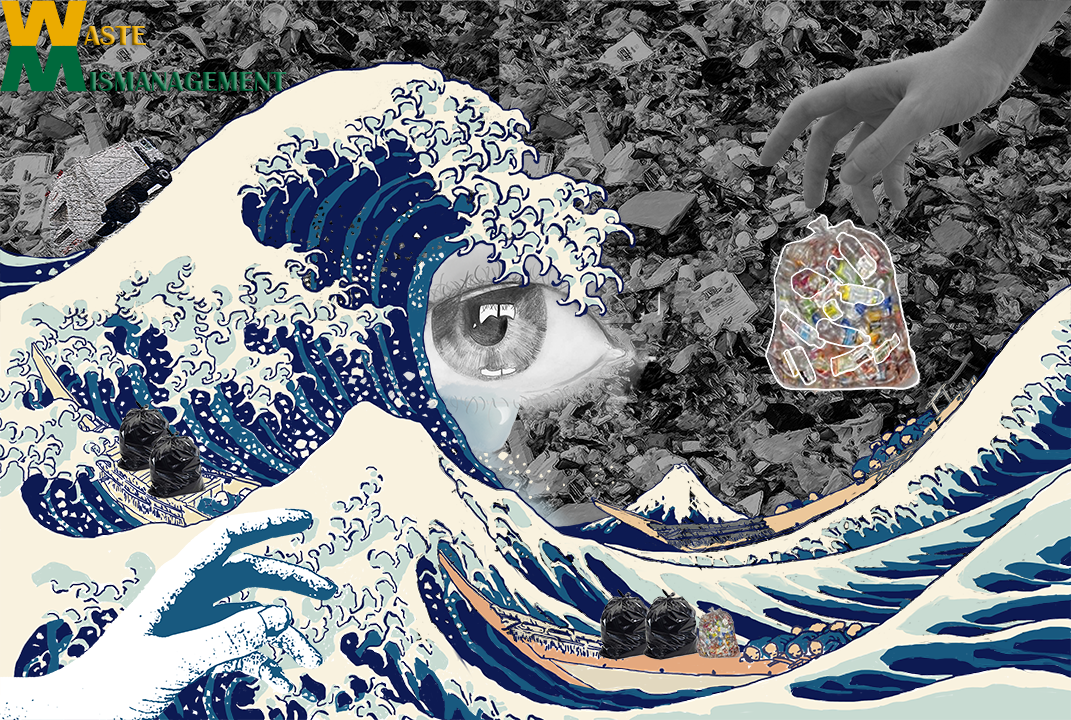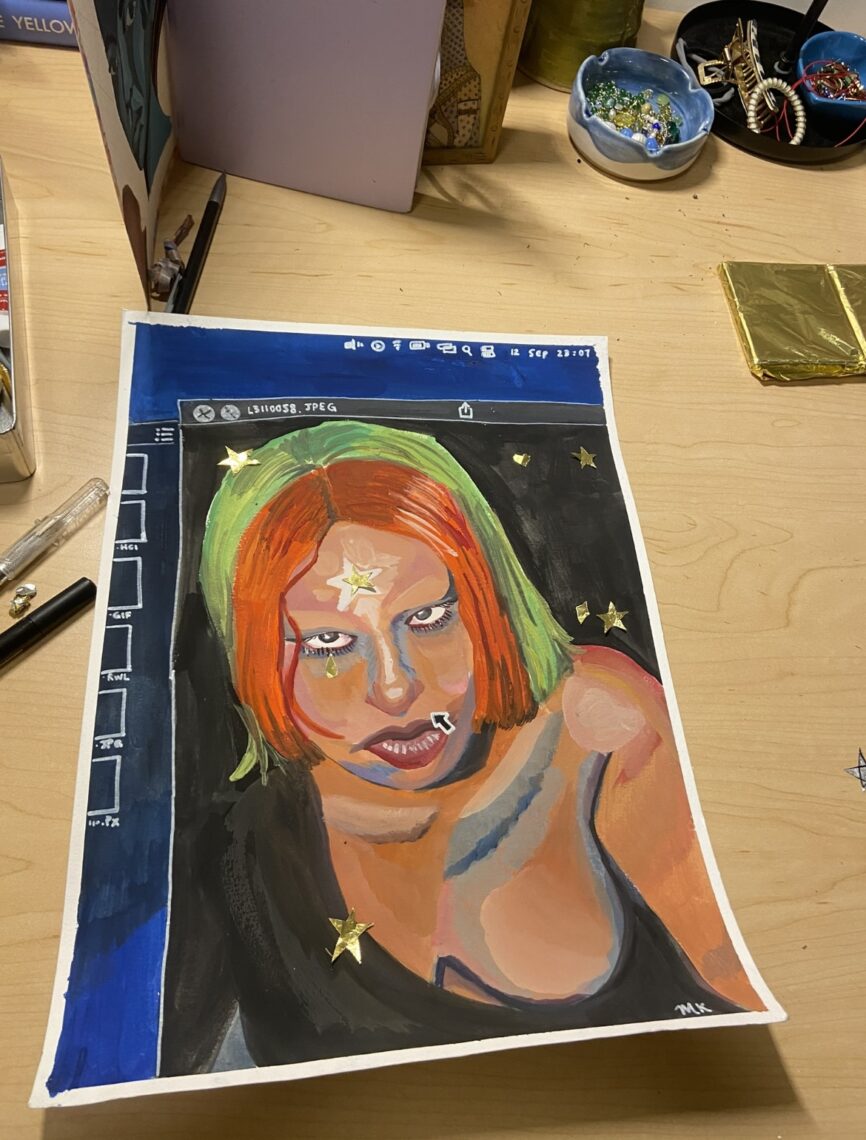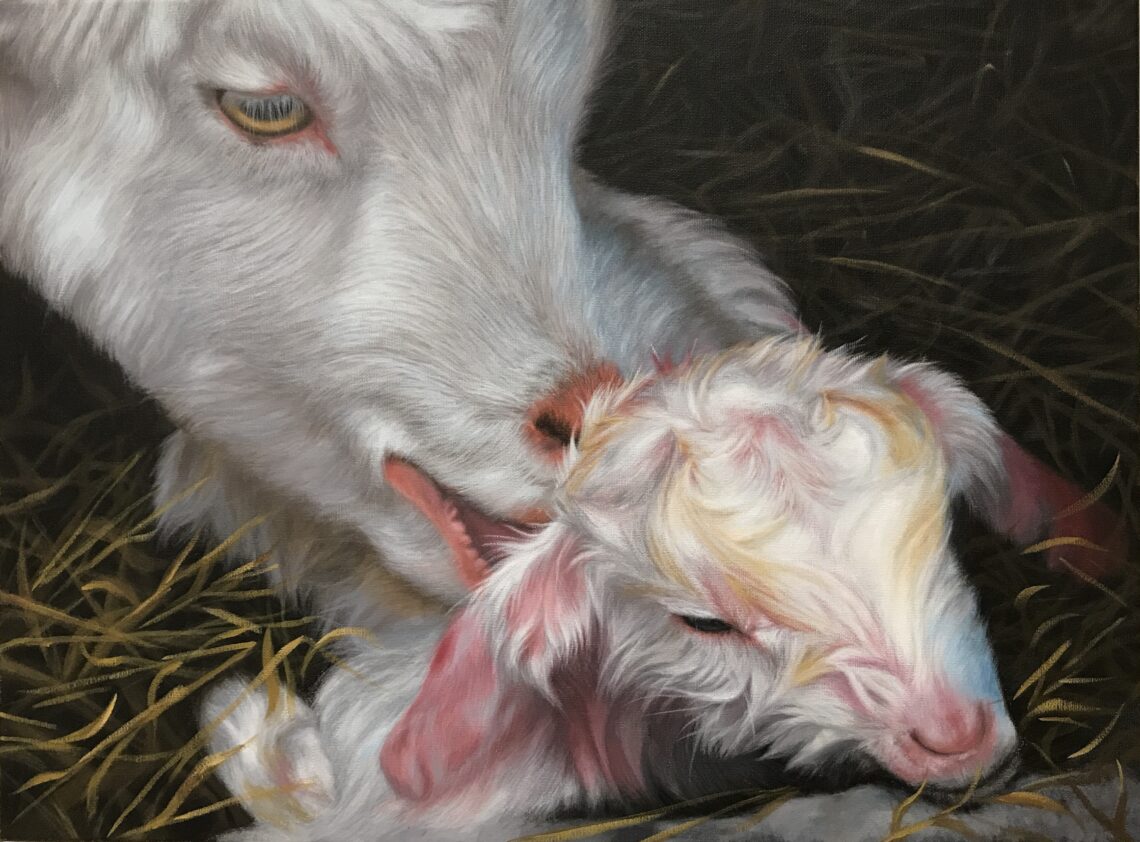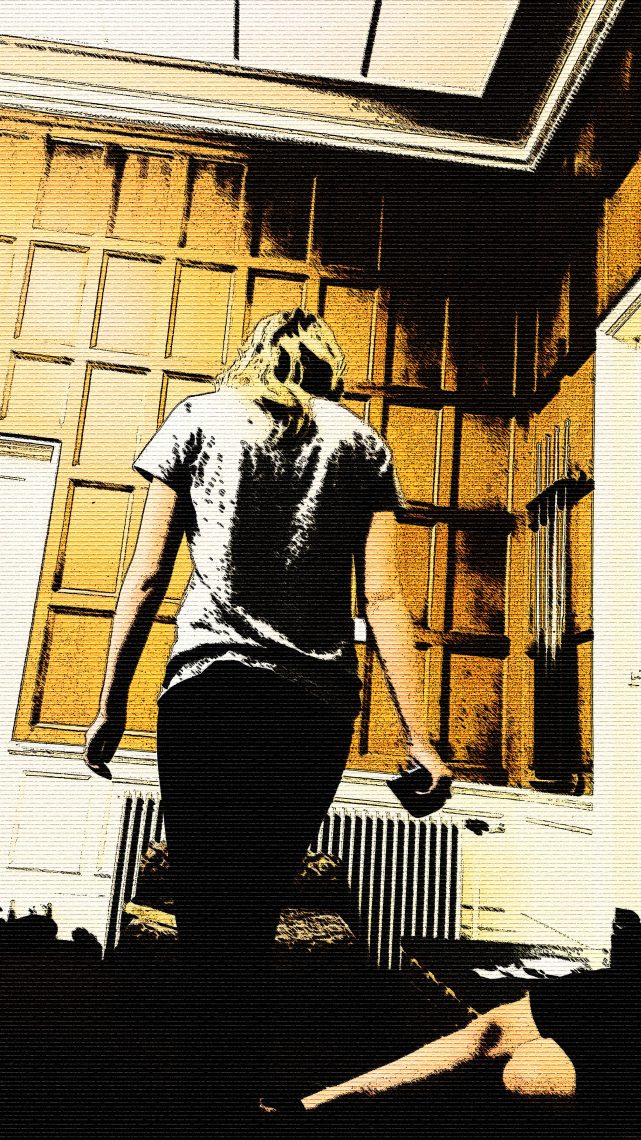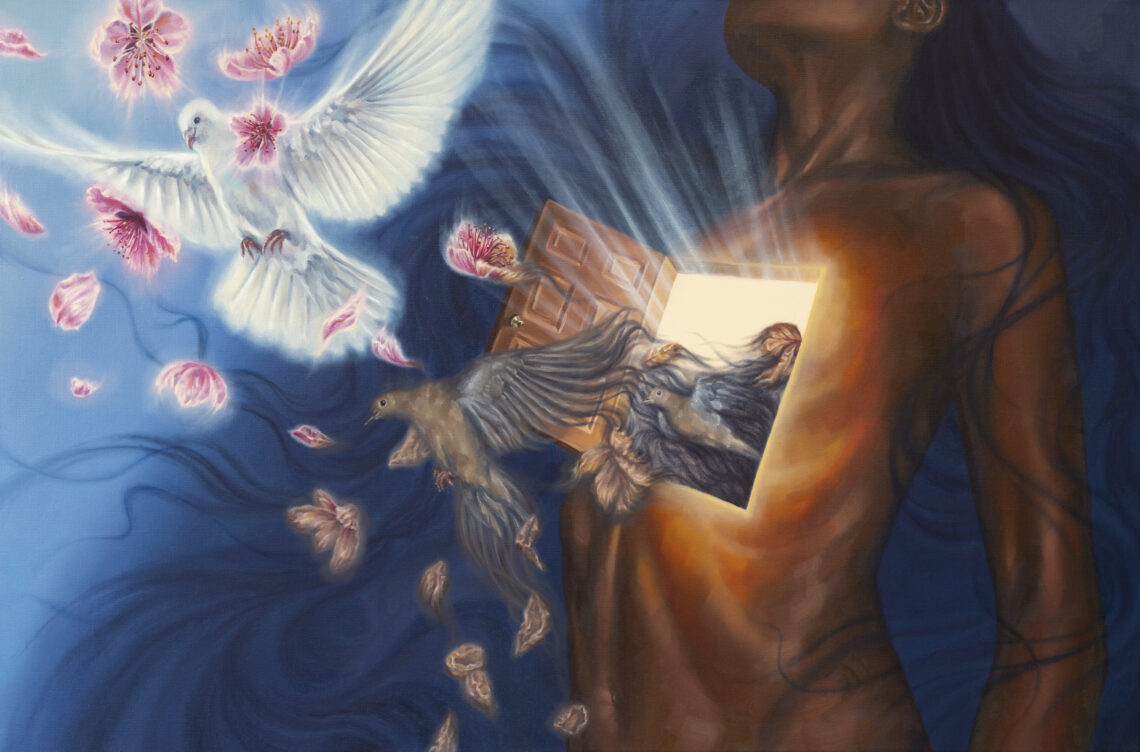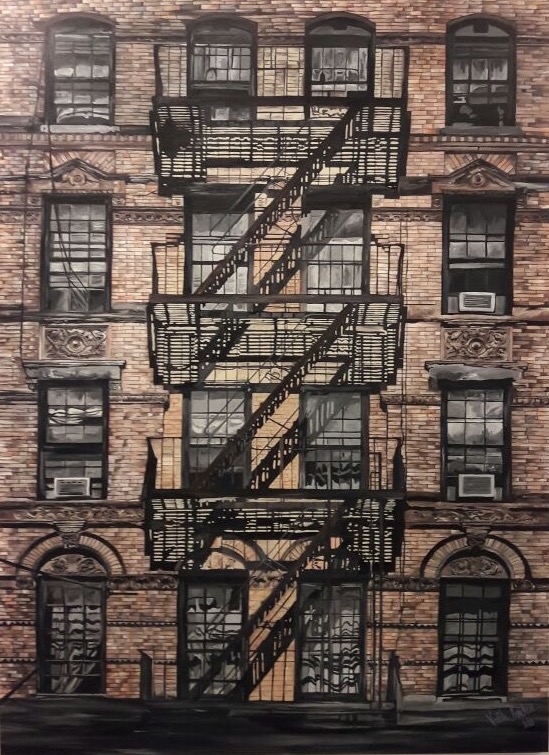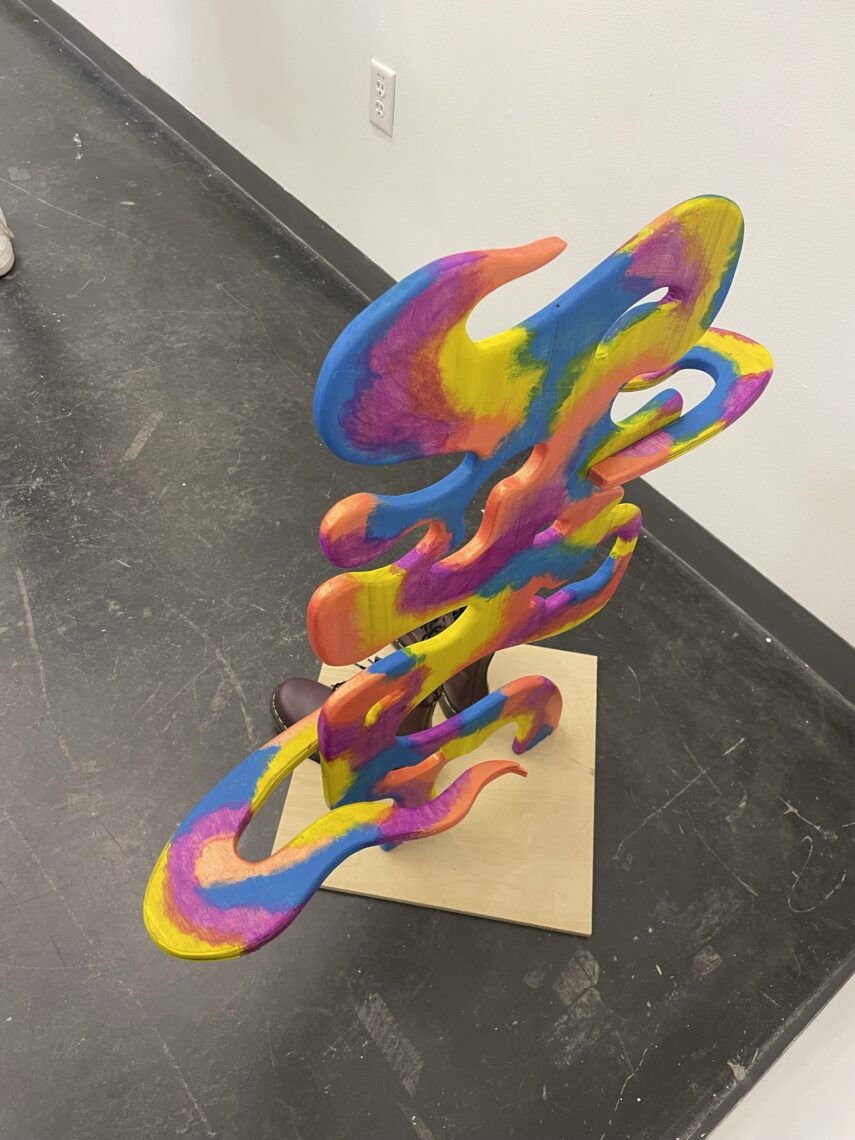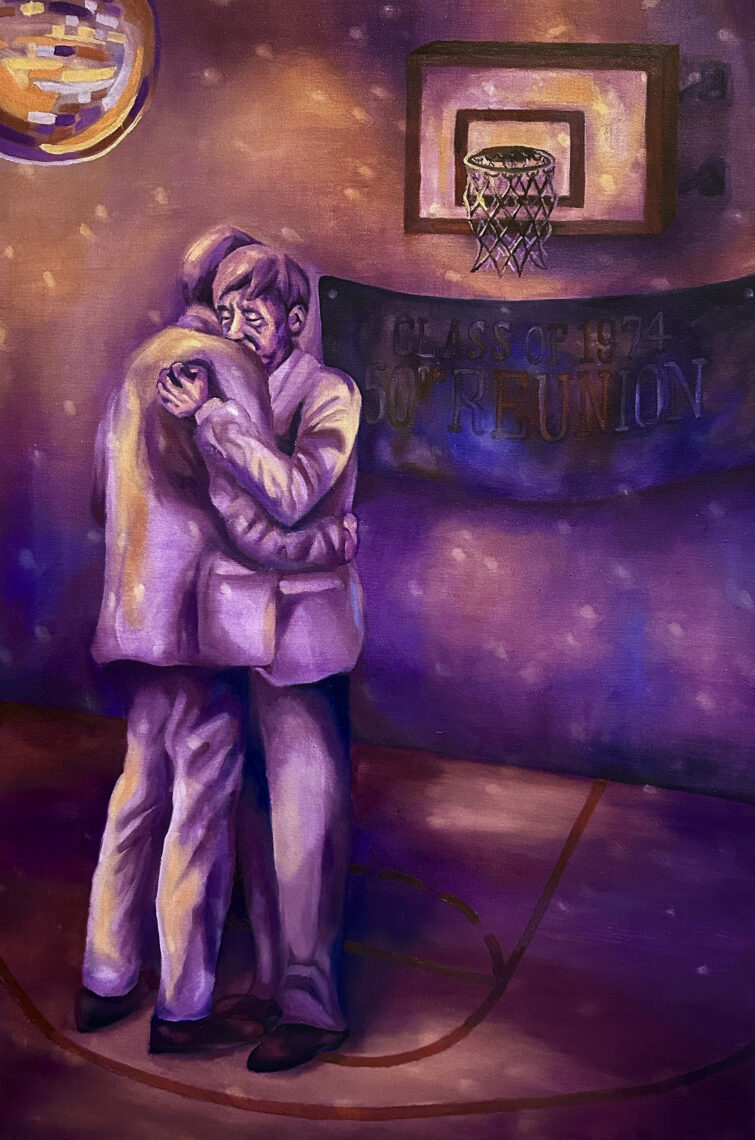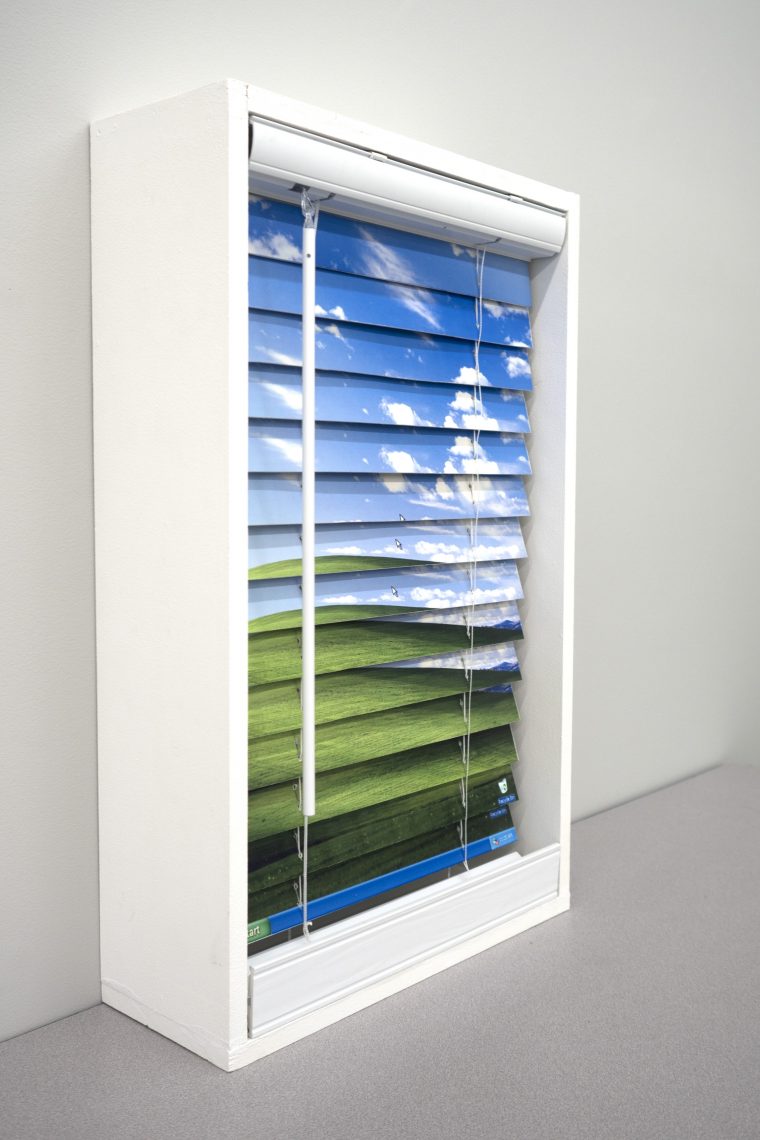
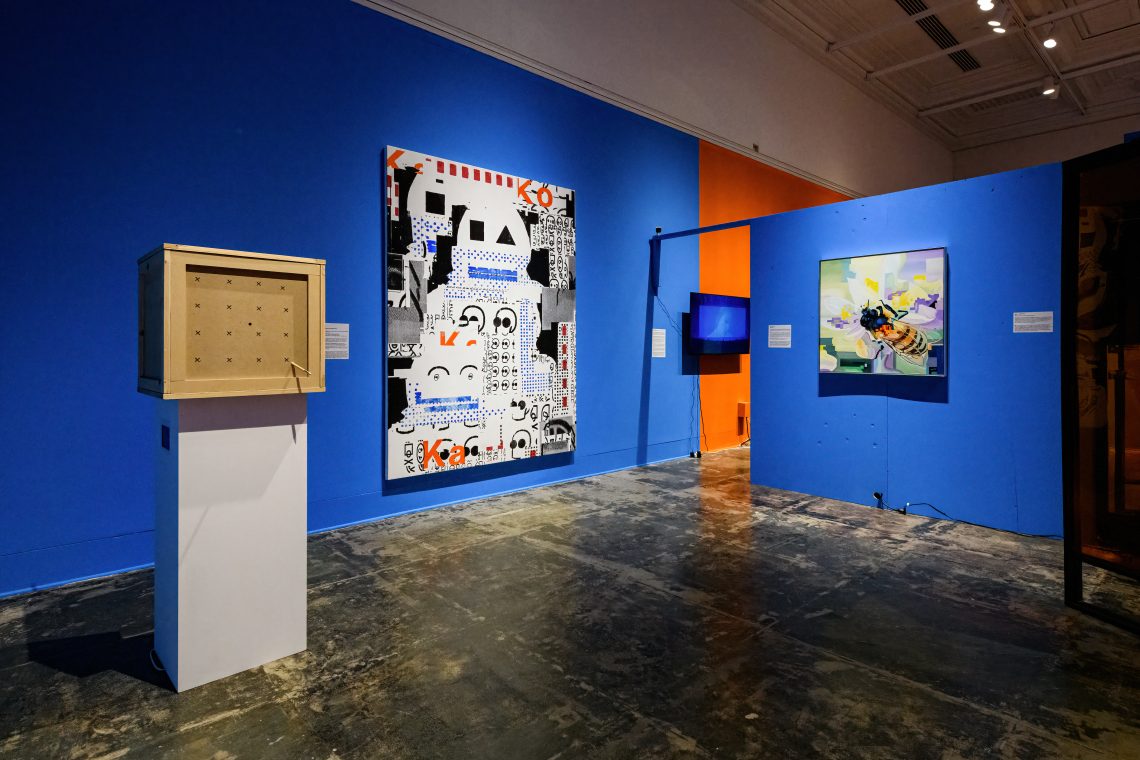
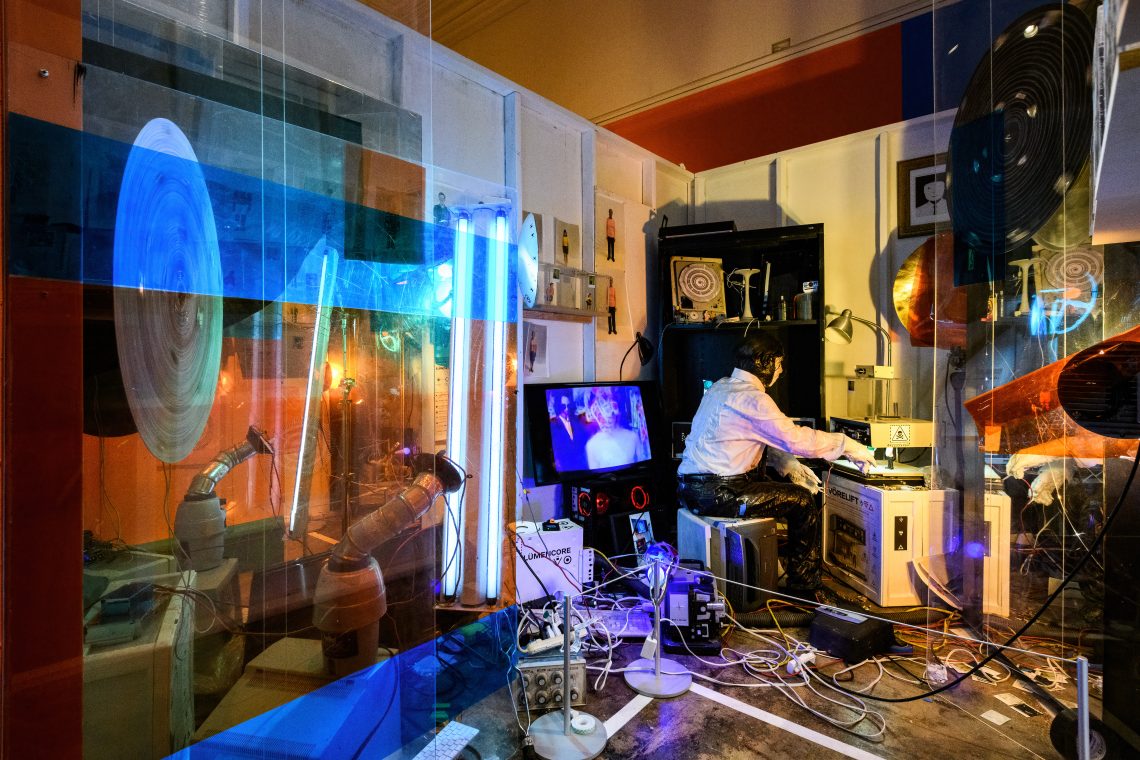
Several of the pieces explore different facets of appearance and nonappearance. (Photo: Shaun Roberts)
New art exhibition explores themes of perception and technology
In a world where technological advancements are pushing the bounds of what is visually possible, EXTRA/PHENOMENALITIES, a new group exhibition at Stanford Art Gallery, explores the themes of appearance and non appearance through sensory experiences.
Open from Jan. 22 to March 13, the exhibition is dedicated to showcasing the phenomena that — despite often going unnoticed — tend to shape how we see, feel and understand the world around us. Topics examined include artificial intelligence’s (AI) role as a collaborative tool in the art-making process, and how technology influences us on a daily basis.
“The exhibition asks about the limits of experience and the ways that the boundaries between art, technology, and daily life are being renegotiated today,” said Shane Denson, a professor of film and media studies, and co-curator. “Algorithms and computational processes of various sorts operate invisibly, outside of our perception, but they exercise a very real and material power over our lives.”
More than that, Denson says, the exhibition is meant to overload the senses.
“By trying to disorient people’s taken-for-granted orientations and expectations around the way art is shown, and more generally around the ways invisible infrastructures structure our lives, we’re hoping this will draw attention to how things could be otherwise,” Denson said.
An iterative process
Every work in EXTRA/PHENOMENALITIES — as well as the bright blue and orange walls and mirrored surfaces that make up the gallery layout — engages the senses via sight and sound in a way that’s equal parts intentional and chaotic.
The 2,000 square-foot space features 25 artworks that range from vibrant glitch art featuring California honey bees meant to convey resilience and warning, to a dystopian installation replete with a humanoid sculpture surrounded by whirring machinery and tiny human figures.
In a collaborative piece created by Shane Denson and his wife Karin Denson, GlitchesAreLikeWildAnimalsInLatentSpace!—Bovine, the pair used 30 of Karin’s glitch paintings as training data to refine a diffusion model, which was prompted to generate new images in her style. They then took the diffusion model’s version of her art, edited it, and repeated the process several times before arriving at the final product.
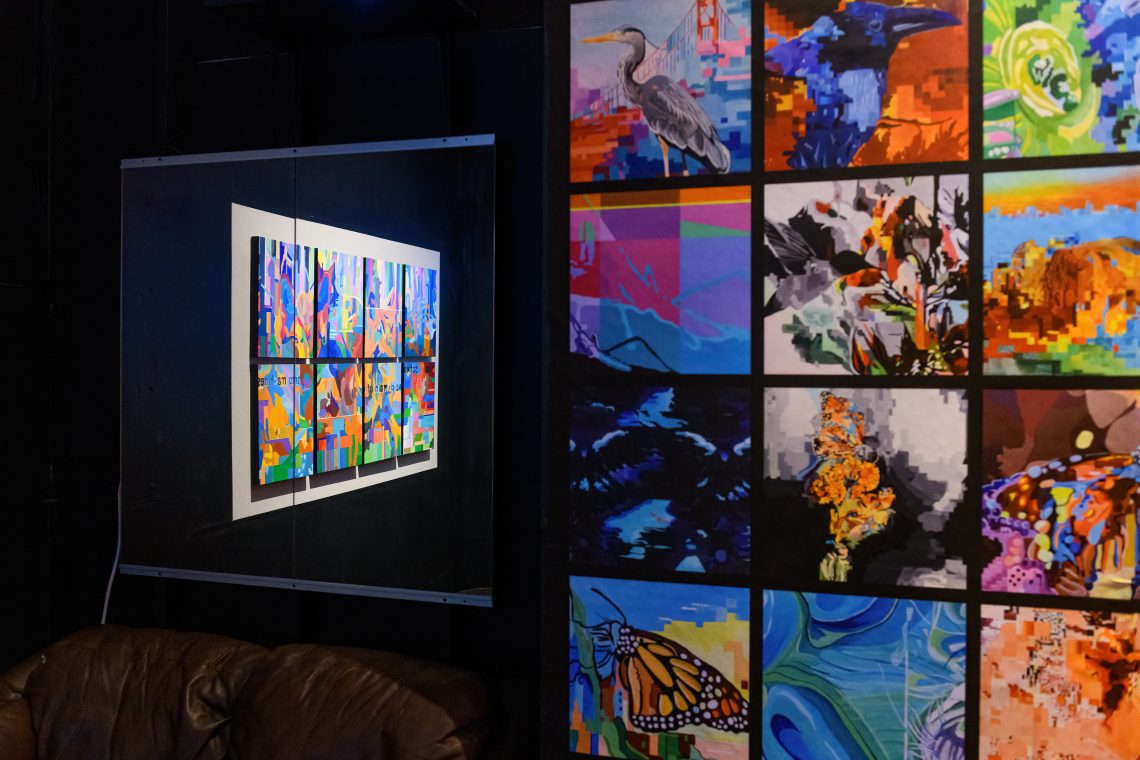
(Photo: Shaun Roberts)
“None of these are perfect, refined works of art, instead they’re meditations, they’re prototypes, they’re thoughts around how things could work and then they’re materialized in a certain moment,” said Gabriel Harrison, associate director and curator of galleries & exhibitions for the Department of Art & Art History. “They’re all rough drafts.”
“I really wanted to bring that level of experimentation to Stanford, because we’re a teaching institution,” Harrison said.
The exhibition itself is a continuation of NON/PHENOMENALITIES, a show co-curated by Denson and Brett Amory at 120710 Gallery in Berkeley in summer of 2025, that analyzed the multiple senses of phenomena through art and contemporary technology. In EXTRA/PHENOMENALITIES co-curators were able to expand by building on the past theme, adding more artists and creating an entirely different space — by laboring over every panel, position and drop of paint — in the Stanford Art Gallery.
“While we were building the exhibition we wanted people to come in and experience something from the art and within themselves,” said Karin Denson, who co-curated the exhibition. “We wanted to tap into people’s inner child with this exhibit and its construction, and allow people to stay curious and not know what awaits around the corner, or how they’ll react to it.”
__________________________________________
The Curators
Brett Amory, Karin Denson and Shane Denson
The Artists
Morehshin Allahyari, Mark Amerika, Will Luers, Chad Mossholder, Brett Amory, Rebecca Baron, Douglas Goodwin, Jon Bernson, Daniel Brickman, Paul DeMarinis, Karin Denson, Shane Denson, Ebti, Frank Floyd, Gabriel Harrison, DJ Meisner, Joshua Moreno, Carlo Nasisse, Miguel Novelo, Andy Rappaport, William Tremblay, Camille Utterback, and Kristen Wong
______________________________________________________________________
An artful collaboration
Ask any of the curators and they’ll tell you that, more than the art making itself, working with other artists, faculty and staff was a rewarding part of the process.
“We realized shortly after we started working together that something very special was happening,” Karin Denson said.
“Sometimes good partnerships come from much effort or compromising, and we did discuss a lot, but it’s been such a rich experience to find out we have the same goals in what we wanted to do with this exhibition,” she said.
Several artists with Stanford ties contributed to the project, including Assistant Professor of Digital Media Art Morehshin Allahyari, Art Lecturer Brett Amory, and Art Preparator Daniel Brickman, among others.
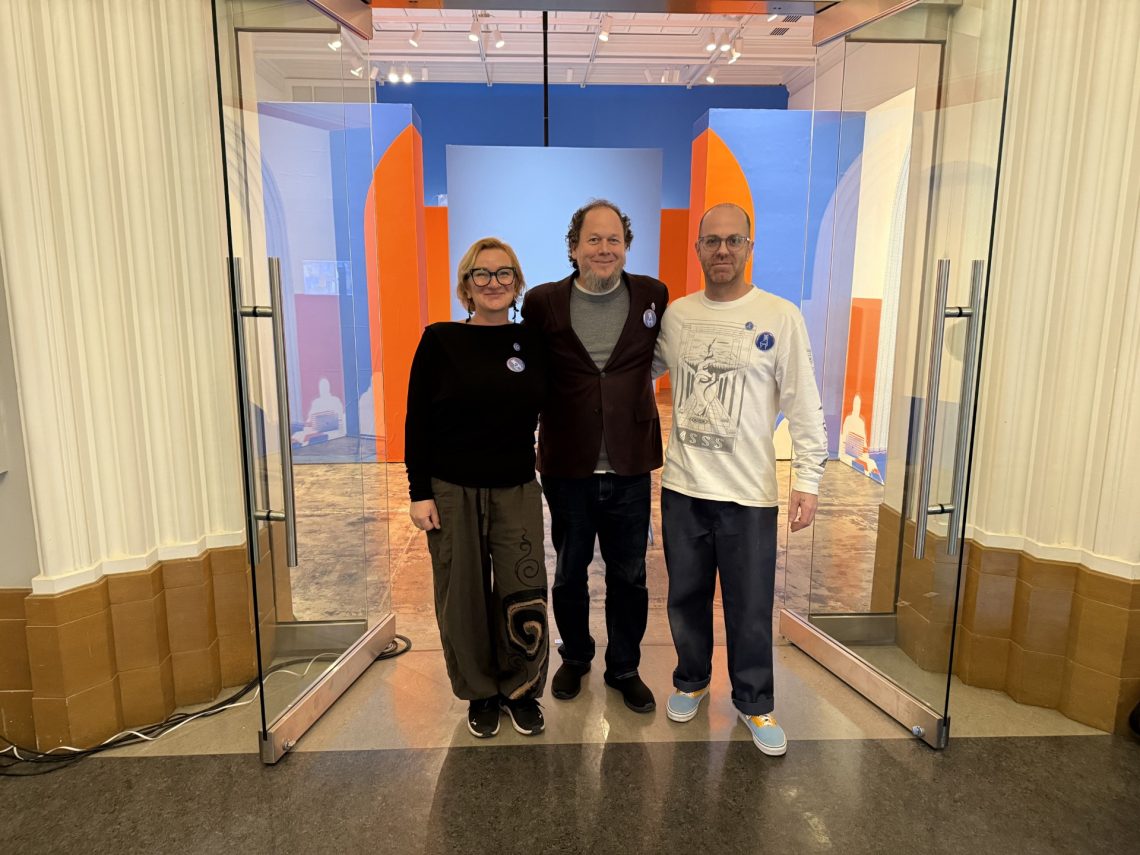
(Photo: Gabriel Harrison)
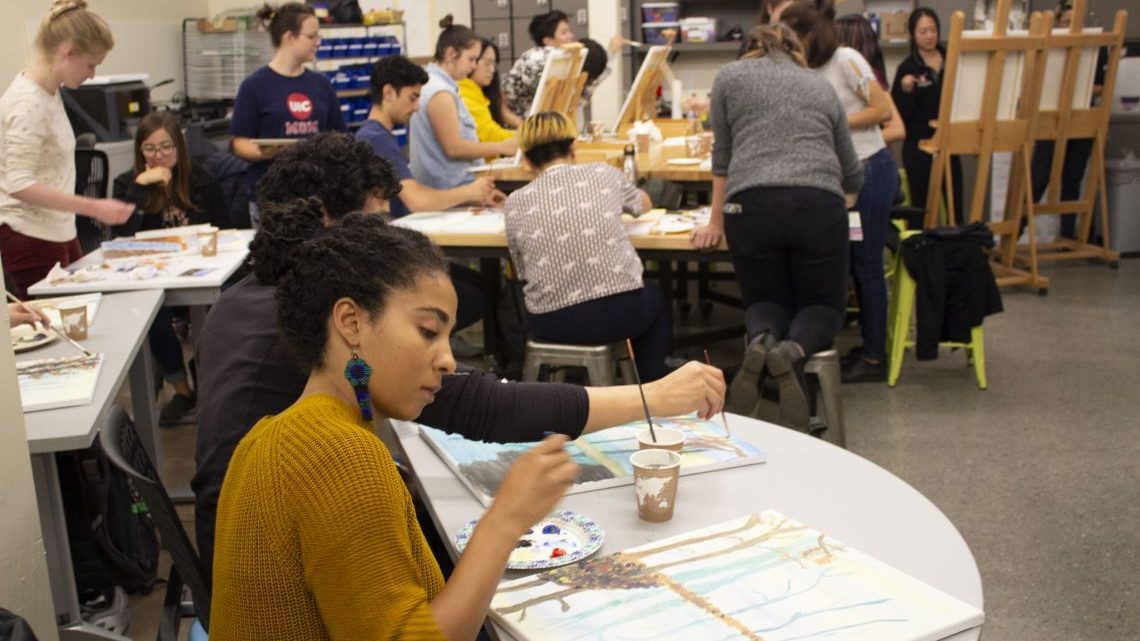
“I thought this show would be great for Stanford Art Gallery because there were so many faculty involved and I really love when we get to explore the reach and range of faculty’s work because that really goes to our mission in terms of educating students on campus,” said Harrison, who manages the gallery and was a contributing artist.
“[Students] get a chance to see the artistic process of the people who are teaching them, and that’s really great,” he said. “It’s been a great opportunity to work together and showcase faculty and their intellectual curiosity.”